

How Long Should an HVAC System Last? Signs It’s Time for Replacement
Your heating and cooling system is one of the biggest investments you’ll make in your home. Like any major appliance, however, it won’t last forever. While many HVAC systems provide years of dependable comfort, age, maintenance, usage, and installation quality all play a role in determining how long they’ll continue operating efficiently.
Knowing when to replace an aging system can help you avoid unexpected breakdowns, rising energy bills, and expensive emergency repairs during the hottest or coldest days of the year.
At Alpine Heating & Air Conditioning, we help homeowners throughout Plumas Lake, Roseville, Rocklin, Lincoln, Granite Bay, Auburn, Sacramento, Yuba City, and surrounding communities evaluate their existing equipment and determine whether repair or replacement offers the best long-term value.
How Long Does an HVAC System Typically Last?
While every system is different, most well-maintained residential HVAC systems generally last:
- Central Air Conditioners: 12–15 years
- Gas Furnaces: 15–20 years
- Heat Pumps: 10–15 years
- Ductless Mini-Split Systems: 15–20 years
Regular maintenance, proper installation, clean air filters, and timely repairs can often help extend the lifespan of your equipment.
Factors That Affect HVAC Lifespan
Regular Maintenance
Annual professional maintenance is one of the best ways to maximize equipment life. Routine inspections help identify worn components before they lead to larger, more expensive failures.
Installation Quality
Even premium HVAC equipment can experience premature failure if it isn’t properly sized or installed. Correct airflow, refrigerant charge, duct design, and equipment sizing all affect long-term reliability.
System Usage
Homes that rely heavily on heating and cooling year-round naturally place more wear on HVAC equipment than homes with milder operating demands.
Indoor Air Quality
Dirty air filters, excessive dust, pet hair, and restricted airflow can force HVAC systems to work harder than necessary, increasing wear on critical components.
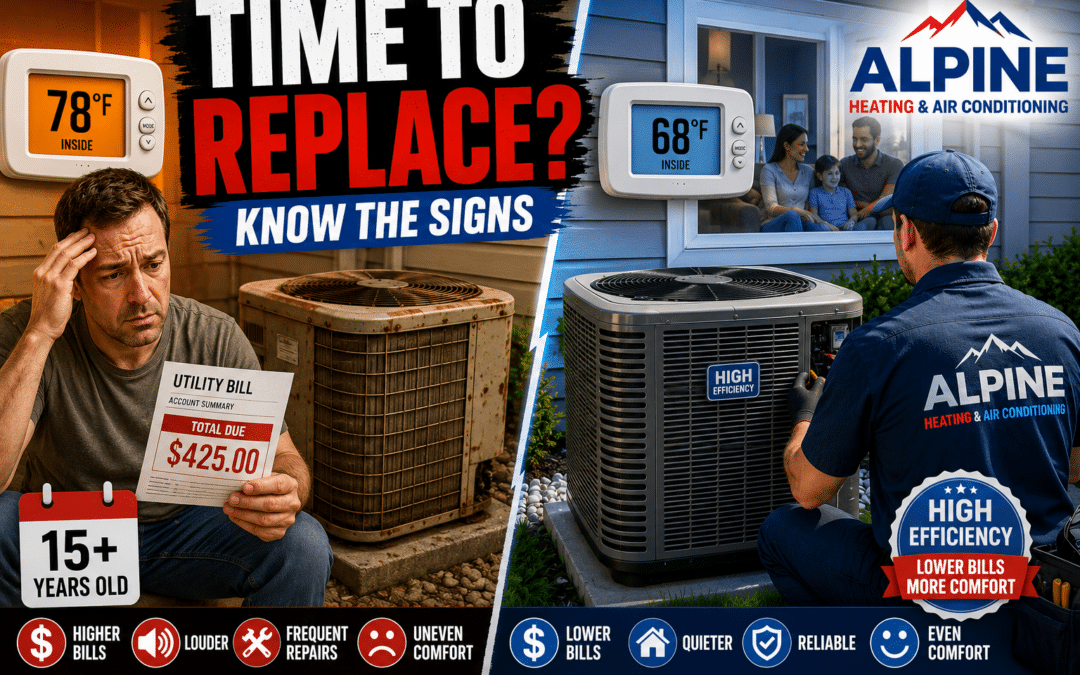
Warning Signs Your HVAC System May Be Nearing the End
1. Frequent Repairs
If you’re scheduling service several times each year, repair costs can quickly begin approaching the value of replacing the equipment.
2. Rising Energy Bills
Older HVAC systems often lose efficiency over time, requiring more electricity or natural gas to provide the same level of comfort.
3. Uneven Temperatures
Hot and cold spots throughout your home may indicate aging equipment, airflow issues, duct problems, or a system that’s struggling to keep up with demand.
4. Strange Noises
Grinding, banging, squealing, rattling, or buzzing sounds shouldn’t be ignored. While some noises require only minor repairs, others may indicate major component wear.
5. Poor Indoor Comfort
If your home never seems to reach the desired temperature or struggles to maintain consistent comfort, your HVAC system may no longer be operating efficiently.
Should You Repair or Replace Your HVAC System?
One of the most common questions homeowners ask is whether it’s worth repairing an older HVAC system or investing in a replacement.
While every situation is different, replacement often becomes the smarter long-term investment when repairs become frequent, energy bills continue rising, or your system can no longer keep your home comfortable.
Questions to Ask Before Repairing an Older System
- Is the system more than 15 years old?
- Has it required multiple repairs in the past two years?
- Are replacement parts becoming difficult or expensive to obtain?
- Have your utility bills steadily increased?
- Does your home have uneven temperatures or poor humidity control?
If you answered “yes” to several of these questions, replacing your HVAC system may provide better value over the long term.
The Benefits of a New HVAC System
Today’s high-efficiency heating and cooling systems offer significant improvements over equipment installed 15 or 20 years ago.
- Lower monthly energy bills.
- More consistent indoor temperatures.
- Quieter operation.
- Improved humidity control.
- Greater reliability.
- Manufacturer warranty protection.
- Compatibility with smart thermostats.
Many homeowners notice improved comfort almost immediately after upgrading to a properly sized, professionally installed HVAC system.
Financing Makes Replacement More Affordable
A new HVAC system is a significant investment, but financing can help make the upgrade more manageable.
Visit our HVAC Financing page to learn about financing options that can help you install a reliable, energy-efficient heating and cooling system without delaying needed replacement.
Professional Installation Matters
Even the best HVAC equipment won’t perform as expected if it’s installed incorrectly.
At Alpine Heating & Air Conditioning, every installation begins with evaluating your home’s size, insulation, ductwork, airflow requirements, and comfort goals. Proper equipment sizing and installation help maximize efficiency, extend equipment life, and improve year-round comfort.
Helping Homeowners Throughout Northern California
Whether you’re considering replacing an aging HVAC system in Auburn, Roseville, Rocklin, Lincoln, Granite Bay, Sacramento, Sun City Lincoln Hills, Sun City Roseville, or Yuba City, Alpine Heating & Air Conditioning can help you choose the right solution for your home and budget.
Schedule an HVAC Replacement Consultation
If you’re wondering whether it’s time to replace your heating and cooling system, we’re here to help. We’ll inspect your existing equipment, explain your options, and provide honest recommendations based on your home’s needs—not high-pressure sales tactics.
Learn more about our general HVAC services, explore our heat pump solutions, or schedule a consultation with Alpine Heating & Air Conditioning today.
Frequently Asked Questions
How long should a residential HVAC system last?
Most central air conditioners last 12 to 15 years, while furnaces often last 15 to 20 years. Proper maintenance can help extend the lifespan of both systems.
What are the signs my HVAC system needs to be replaced?
Frequent repairs, rising energy bills, uneven temperatures, excessive noise, poor performance, and an aging system are all common indicators that replacement may be the better option.
Is it better to repair or replace an old HVAC system?
That depends on the system’s age, repair history, efficiency, and the cost of the current repair. A professional inspection can help determine which option provides the best long-term value.
Will a new HVAC system lower my energy bills?
In many cases, yes. Modern high-efficiency systems typically use less energy than older equipment while providing more consistent comfort.
Can I finance a new HVAC system?
Yes. Alpine Heating & Air Conditioning offers financing options that can help make replacing your HVAC system more affordable.
How often should I schedule HVAC maintenance?
Professional maintenance is recommended at least once each year. Many homeowners schedule cooling maintenance in the spring and heating maintenance in the fall.
How do I know what size HVAC system my home needs?
Proper sizing requires a professional load calculation that considers your home’s size, insulation, windows, ductwork, and other factors. Installing the correct size system is essential for efficiency and comfort.