

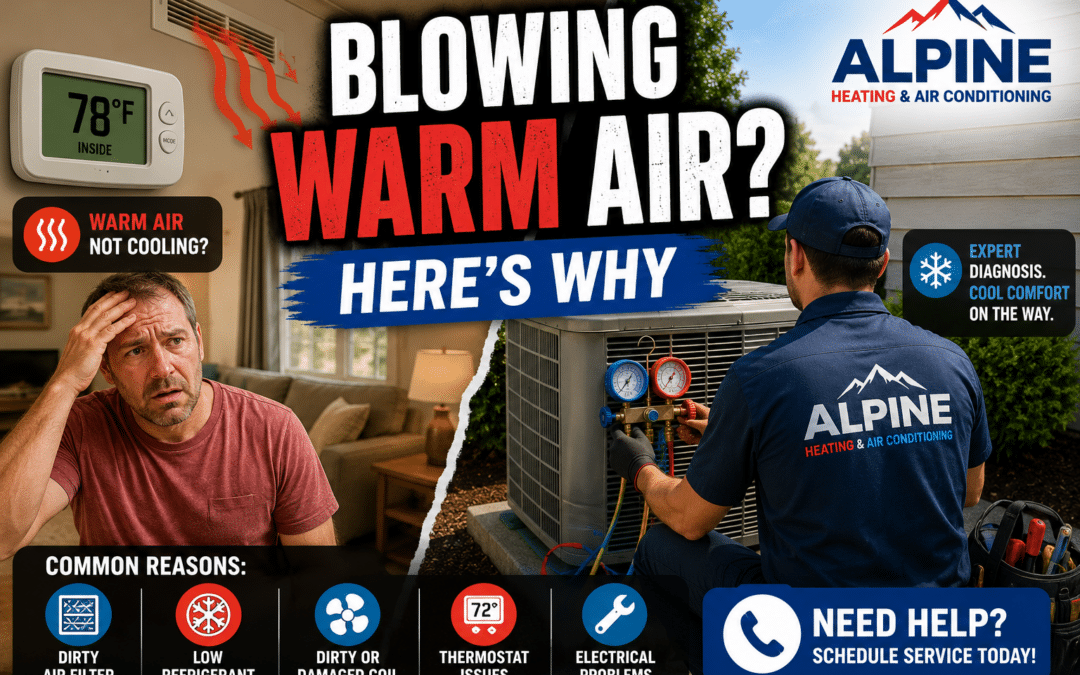
Why Is My Air Conditioner Blowing Warm Air? 8 Common Causes
There’s nothing more frustrating than turning on your air conditioner during a hot Northern California summer only to discover warm air blowing from your vents. Before assuming your HVAC system needs to be replaced, it’s important to understand that several issues—many of them relatively minor—can cause this problem.
Some causes are simple enough for homeowners to check themselves, while others require professional diagnosis and repair. Knowing the difference can save you time, money, and unnecessary stress.
At Alpine Heating & Air Conditioning, we help homeowners throughout Plumas Lake, Roseville, Rocklin, Lincoln, Granite Bay, Auburn, Sacramento, Yuba City, and surrounding communities quickly diagnose cooling problems and restore comfort. Here are the most common reasons your air conditioner may be blowing warm air.
1. Your Thermostat Is Set Incorrectly
It sounds simple, but thermostat settings are one of the most common causes of warm air complaints.
Make sure your thermostat is:
- Set to Cool instead of Heat.
- Set to Auto or On depending on your preference.
- Adjusted to a temperature lower than your current indoor temperature.
- Using fresh batteries if applicable.
Sometimes a recent power outage or accidental setting change is all that’s preventing your system from cooling properly.
2. A Dirty Air Filter Is Restricting Airflow
A clogged air filter reduces airflow throughout your HVAC system, making it much harder for your air conditioner to cool your home efficiently.
Signs of a dirty filter include:
- Weak airflow from vents.
- Higher utility bills.
- Uneven cooling throughout the house.
- Longer cooling cycles.
If your filter appears dirty, replacing it may solve the problem and improve system performance almost immediately.
3. Your Outdoor Condenser Is Dirty
Your outdoor condenser unit releases heat collected from inside your home. If it’s covered with dirt, leaves, grass clippings, or other debris, it cannot efficiently remove heat.
Keeping at least two feet of clearance around the unit and gently rinsing debris from the exterior can improve airflow. However, internal coil cleaning should be performed by an HVAC professional.
4. Low Refrigerant Levels
If your air conditioner is low on refrigerant, it won’t be able to absorb enough heat from inside your home.
Common signs include:
- Warm air from vents.
- Ice forming on refrigerant lines.
- Long run times.
- Hissing sounds that may indicate a refrigerant leak.
Refrigerant doesn’t get “used up.” Low refrigerant almost always means there’s a leak that needs to be professionally repaired before the system can be recharged.
5. A Frozen Evaporator Coil
Ironically, ice buildup inside your HVAC system can prevent your air conditioner from cooling properly.
Frozen coils are commonly caused by:
- Restricted airflow.
- Dirty air filters.
- Low refrigerant.
- Blower motor problems.
If you notice ice around the indoor unit, turn the system off and contact a qualified HVAC technician.
6. A Tripped Circuit Breaker
Your air conditioning system consists of both an indoor and an outdoor unit. Sometimes the indoor blower continues operating while the outdoor condenser loses power due to a tripped breaker. When this happens, you’ll still feel air coming from your vents—but it won’t be cold.
If you discover a tripped breaker, reset it once. If it trips again, stop resetting it and schedule a professional inspection, as repeated trips usually indicate an electrical problem.
7. Electrical Component Failure
Your air conditioner relies on several electrical components to start and operate correctly. A failed capacitor, contactor, relay, or wiring issue can prevent the outdoor unit from running even though the indoor fan is still circulating air.
Electrical repairs should always be performed by a licensed HVAC technician for safety and to prevent further damage.
8. Your Air Conditioner Is Simply Worn Out
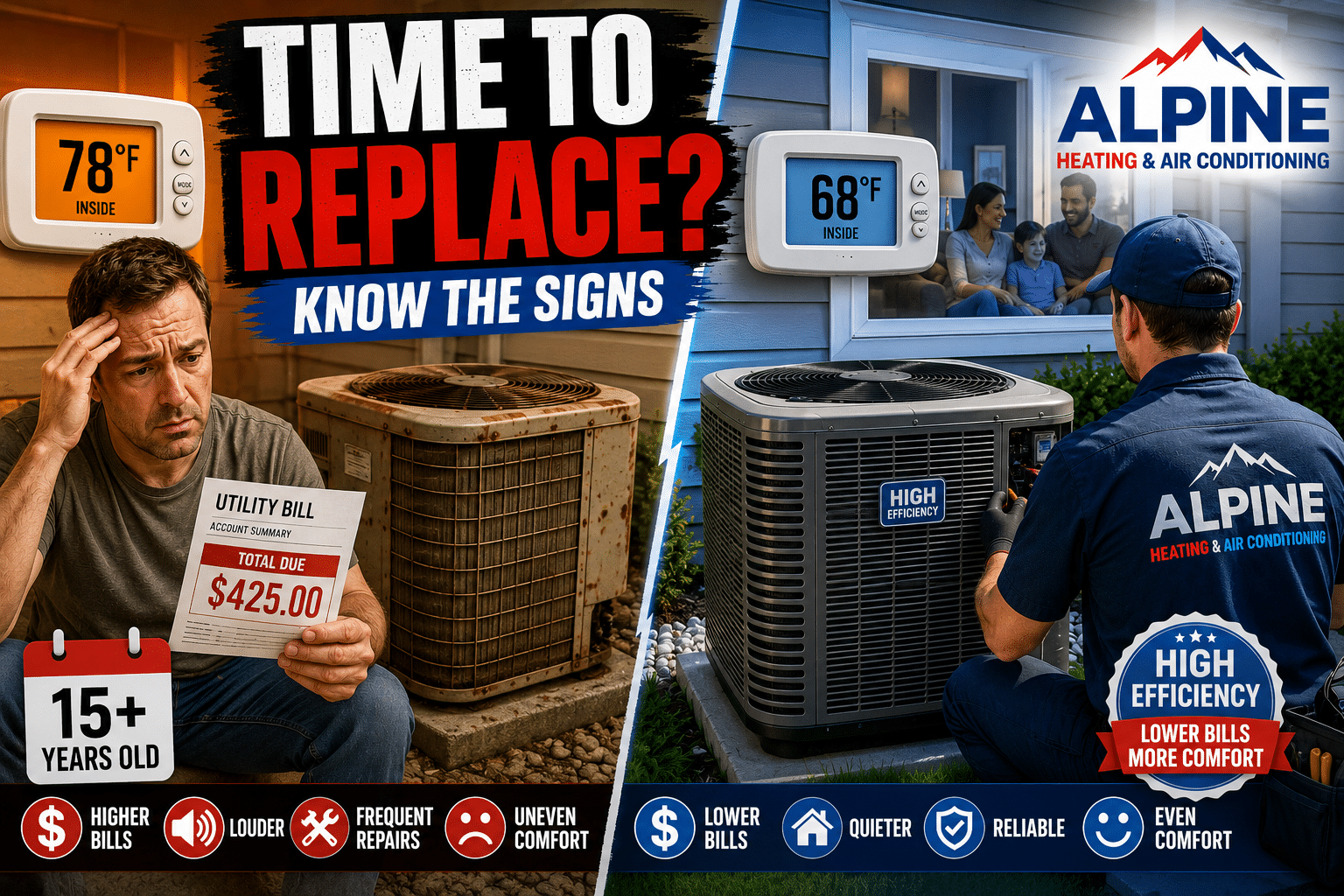
If your system is 12 to 15 years old or older, frequent breakdowns and poor cooling performance may indicate it’s nearing the end of its service life.
Older systems often become less efficient over time, require more frequent repairs, and may use refrigerants that are expensive or no longer readily available.
What You Can Check Before Calling for Service
Before scheduling an HVAC repair appointment, there are a few simple things you can safely inspect yourself.
- Verify the thermostat is set to Cool.
- Replace a dirty air filter.
- Make sure all supply vents are open.
- Remove leaves and debris around the outdoor condenser.
- Check your home’s electrical panel for a tripped breaker.
If these steps don’t restore cool air, it’s time to have the system professionally diagnosed.
Repair or Replace?
Not every warm-air problem requires a new air conditioner. Many issues—such as dirty filters, faulty capacitors, thermostat problems, or minor electrical repairs—can often be corrected without replacing the entire system.
However, replacement may be the more cost-effective solution if your system:
- Is more than 15 years old.
- Requires frequent repairs.
- Uses outdated refrigerant.
- Has significantly reduced efficiency.
- Can no longer keep your home comfortable during summer.
A professional inspection can help you compare repair costs against the long-term benefits of installing a newer, more energy-efficient system.
Serving Homeowners Throughout Northern California
Whether your air conditioner is blowing warm air in Auburn, Roseville, Rocklin, Lincoln, Granite Bay, Sacramento, Sun City Lincoln Hills, Sun City Roseville, or Yuba City, Alpine Heating & Air Conditioning can quickly diagnose the problem and recommend the most cost-effective solution.
Schedule Professional AC Repair
If your air conditioner is blowing warm air, don’t wait for the problem to get worse. Prompt repairs can often prevent additional damage and restore your home’s comfort before a small issue becomes a major expense.
Learn more about our air conditioning services, general HVAC services, or schedule your service appointment with Alpine Heating & Air Conditioning today.
Frequently Asked Questions
Why is my AC blowing warm air but the fan is running?
This often means the indoor blower is working, but the outdoor condenser isn’t. Common causes include a tripped breaker, failed capacitor, electrical issue, or low refrigerant.
Can a dirty air filter cause warm air?
Yes. A severely clogged filter can restrict airflow enough to reduce cooling performance and may even contribute to a frozen evaporator coil.
Should I add refrigerant myself?
No. Refrigerant should only be handled by licensed HVAC professionals. Low refrigerant almost always indicates a leak that needs to be repaired.
How do I know if my condenser isn’t running?
If the outdoor unit isn’t making its normal operating sound while the indoor blower continues running, the condenser may have lost power or experienced an electrical failure.
When should I replace instead of repair my air conditioner?
If your system is over 15 years old, requires frequent repairs, or has major component failures, replacement may provide better long-term value.
Can I prevent my AC from blowing warm air?
Regular maintenance, changing air filters, keeping the outdoor unit clean, and scheduling annual HVAC tune-ups can help prevent many common cooling problems.
How quickly can Alpine Heating & Air Conditioning diagnose the problem?
Our experienced technicians can inspect your system, identify the cause of the warm air, explain your repair options, and help restore your home’s comfort as quickly as possible.