


Why Are Some Rooms in My House Hotter or Colder Than Others?
Does your upstairs always feel like a sauna while the downstairs stays perfectly comfortable? Maybe one bedroom is freezing during the winter while another never seems to cool off in the summer. Uneven temperatures are one of the most common comfort complaints homeowners experience, especially in two-story homes throughout Northern California.
Although many people assume this means it’s time to replace their HVAC system, that’s often not the case. Temperature differences between rooms are usually caused by airflow issues, ductwork problems, inadequate insulation, poor system balancing, or the lack of an HVAC zoning system. Identifying the real cause is the first step toward making your home more comfortable year-round.
At Alpine Heating & Air Conditioning, we’ve helped homeowners throughout Plumas Lake, Roseville, Rocklin, Lincoln, Granite Bay, Auburn, Sacramento, Yuba City, and the surrounding communities solve uneven heating and cooling problems since 1990. In this guide, we’ll explain why it happens and what can be done to fix it.
Is It Normal for Upstairs Rooms to Be Hotter?
Yes—to a point.
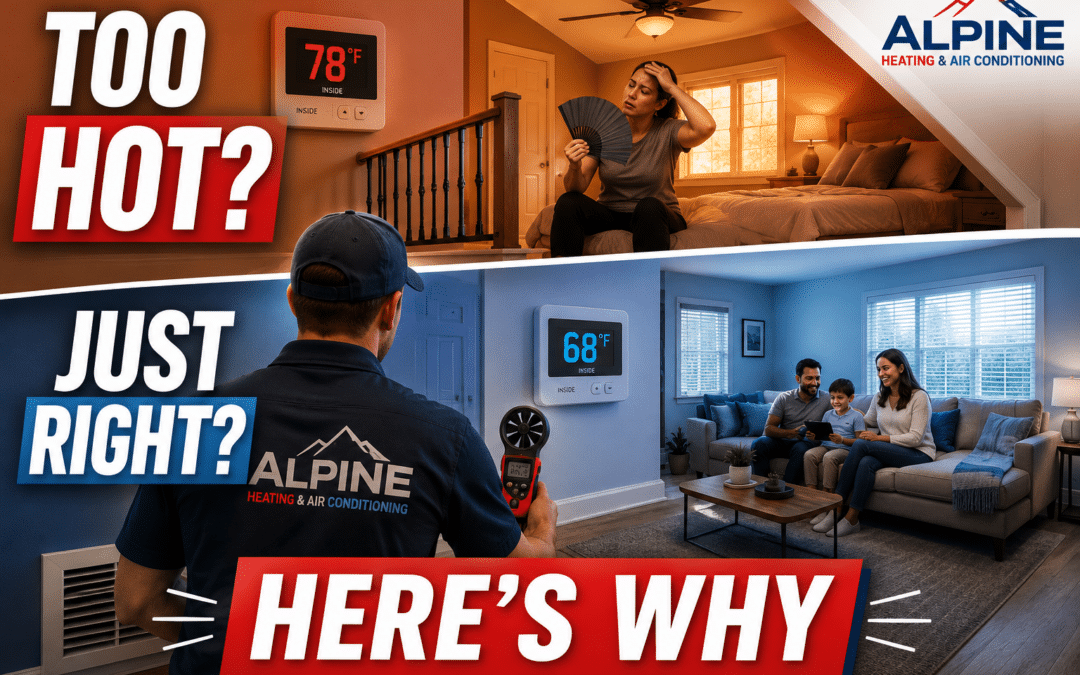
Heat naturally rises, which means second-story rooms often become warmer than rooms on the main floor. During Northern California summers, sunlight striking the roof adds even more heat to upper-level living spaces. That’s why many homeowners notice their upstairs reaching 78°F while the downstairs remains a comfortable 68°F.
While some temperature variation is expected, differences greater than three or four degrees usually indicate your HVAC system isn’t distributing conditioned air as efficiently as it should.
The Most Common Causes of Uneven Temperatures
1. Poor Airflow
If certain rooms aren’t receiving enough conditioned air, they’ll naturally become warmer in summer and cooler in winter. Restricted airflow can result from dirty air filters, partially closed dampers, blocked supply registers, or undersized ductwork.
A professional airflow evaluation can quickly identify whether your HVAC system is delivering the proper amount of air to every room in the house.
2. Leaky or Damaged Ductwork
Your duct system is responsible for delivering heated or cooled air throughout your home. If ducts are leaking in the attic or crawl space, a significant amount of conditioned air may never reach the rooms that need it.
Small duct leaks can dramatically reduce comfort while increasing energy costs because your HVAC equipment has to work harder to compensate.
If ductwork problems are discovered, Alpine’s ducting services can restore proper airflow and improve overall system performance.
3. Your Home Was Never Properly Balanced
Every HVAC system should be balanced so each room receives the appropriate amount of airflow. Unfortunately, many homes are never adjusted after construction or after equipment is replaced.
Balancing dampers within the duct system allows technicians to fine-tune airflow, reducing temperature differences between rooms without replacing major equipment.
4. Insulation Problems
Your HVAC system can only do so much if your home allows conditioned air to escape.
Attic insulation, wall insulation, aging windows, and poor air sealing all influence indoor temperatures. Upstairs rooms are especially vulnerable because they’re directly beneath the attic, where temperatures can become extremely high during the summer.
5. The Thermostat Is in the Wrong Location
Your thermostat measures the temperature in only one area of your home. If it’s located downstairs, your air conditioner may shut off once the first floor reaches the desired temperature—even though the upstairs is still far too warm.
This is one of the most common reasons homeowners experience the classic “68° downstairs, 78° upstairs” problem.
Could HVAC Zoning Solve the Problem?
For many homeowners, yes.
An HVAC zoning system divides your home into independently controlled comfort zones. Instead of conditioning the entire house based on one thermostat, each zone can maintain its own temperature.
This allows the upstairs and downstairs to operate independently, improving comfort while often reducing unnecessary energy use.
Homes with multiple stories, large open floor plans, bonus rooms, or extensive window exposure often benefit the most from HVAC zoning.
Can a Whole House Fan Help?
In many Northern California homes, yes.
When outdoor temperatures cool off in the evening, a whole house fan can quickly remove trapped heat from your home by drawing in cooler outside air while exhausting warm air through the attic. This is especially effective during the spring, summer, and early fall when daytime temperatures climb but evenings become much cooler.
Many homeowners notice the biggest improvement upstairs, where heat naturally accumulates throughout the day.
If you’re looking for an energy-efficient way to improve indoor comfort, Alpine’s QuietCool whole house fan solutions may be worth considering.
Could Your HVAC System Be Too Small or Too Large?
System sizing plays a major role in maintaining consistent temperatures throughout your home.
An undersized HVAC system may run continuously without ever fully cooling the upper floor during extreme summer weather. An oversized system can create a different problem by cooling the area around the thermostat too quickly before conditioned air has been evenly distributed throughout the house.
Proper equipment sizing, airflow calculations, and duct design all work together to create balanced comfort.
Simple Things You Can Check Yourself
Before scheduling service, there are several things homeowners can safely inspect.
- Replace a dirty air filter.
- Verify that all supply and return vents are open and unobstructed.
- Move furniture away from floor and wall registers.
- Keep interior doors open whenever possible to improve circulation.
- Close blinds or curtains on windows receiving direct afternoon sunlight.
- Run ceiling fans in the correct seasonal direction.
- Check that your thermostat settings haven’t accidentally changed.
If uneven temperatures continue after these basic checks, the problem likely requires a professional inspection.
When It’s Time to Call an HVAC Professional
If one room consistently stays several degrees warmer or cooler than the rest of the house, the issue usually won’t resolve itself.
A professional evaluation can identify:
- Airflow restrictions.
- Duct leakage.
- Improper system balancing.
- Thermostat placement issues.
- Failing blower components.
- Insulation deficiencies.
- Whether HVAC zoning would improve comfort.
Addressing these issues early often improves comfort while reducing unnecessary wear on your heating and cooling equipment.
Serving Homeowners Throughout Northern California
Whether your upstairs is always too hot in Roseville, your downstairs feels too cold in Rocklin, or you’re dealing with uneven temperatures in Auburn, Lincoln, Granite Bay, Sacramento, Sun City Lincoln Hills, Sun City Roseville, or Yuba City, Alpine Heating & Air Conditioning can help identify the cause and recommend the right solution.
Restore Comfort to Every Room
You shouldn’t have to avoid certain rooms because they’re too hot in the summer or too cold during the winter. Whether the solution involves improving airflow, repairing ductwork, installing HVAC zoning, adding a whole house fan, or simply performing routine maintenance, the right diagnosis makes all the difference.
Our experienced technicians take the time to identify the root cause—not just treat the symptoms—so you can enjoy consistent comfort throughout your home.
If you’re tired of battling uneven temperatures, schedule service today or contact Alpine Heating & Air Conditioning to schedule a professional system evaluation.
Frequently Asked Questions
Why is my upstairs hotter than my downstairs?
Heat naturally rises, and upstairs rooms are often affected by roof heat, attic temperatures, airflow limitations, or thermostat placement. A difference of more than a few degrees may indicate an HVAC issue.
Can HVAC zoning fix uneven temperatures?
Yes. HVAC zoning allows different areas of your home to maintain separate temperatures, making it one of the most effective solutions for two-story homes.
Can dirty air filters cause one room to be hotter than another?
They can contribute by reducing airflow throughout the system, making it harder for conditioned air to reach every room evenly.
Do ceiling fans actually cool a room?
Ceiling fans don’t lower the air temperature, but they improve air circulation and create a wind-chill effect that makes occupants feel more comfortable.
Can duct leaks make upstairs rooms hotter?
Yes. Leaking ductwork can reduce the amount of cooled air reaching upper-level rooms while increasing energy consumption.
Should I close vents in rooms I don’t use?
Generally, no. Closing vents can disrupt system airflow and may reduce overall HVAC efficiency depending on your system design.
Will a whole house fan help cool my upstairs?
In many Northern California homes, a whole house fan can quickly remove accumulated heat during cool evenings and improve upstairs comfort.
When should I call an HVAC technician?
If one area of your home consistently remains several degrees warmer or colder than the rest, a professional inspection can identify the underlying cause before it leads to larger comfort or efficiency problems.